
Products
Fall protection
Harnesses, lifelines and anchors from 3M, engineered rail systems from Rigid Lifelines — and the clearance arithmetic that decides whether any of it stops the fall in time.
Start here, not with the catalog
A 6 ft lanyard needs about 18 ft below the anchor. Most places don’t have it.
Free fall, then deceleration, then harness stretch, then the height of the worker below their own D-ring — it adds up to roughly three times the length of the lanyard. On a mezzanine, a truck deck, or most of the places people actually clip on, the harness does its job, the lanyard does its job, and the worker still reaches the floor. Work the clearance out before choosing equipment.
Fall clearance
Work out what you need below the anchor
Every component of the sum, so you can check it — rather than a single number to take on trust.
Where the distance goes
| Free fallAt or above the dorsal D-ring | 6 ft |
| Deceleration distanceOSHA maximum — your device may be less | 3.5 ft |
| D-ring shiftHarness stretch during arrest | 1 ft |
| Worker height below D-ringD-ring to soles | 5 ft |
| Safety marginClearance left over at the bottom | 2 ft |
| Total clearance required | 17.5 ft |
3M DBI-SALA & Protecta · 3005 part numbers
What the worker wears and clips to
Every family in 3M's fall-protection range, with every size and configuration it comes in. Pick the kind of equipment and the part numbers are on that page.
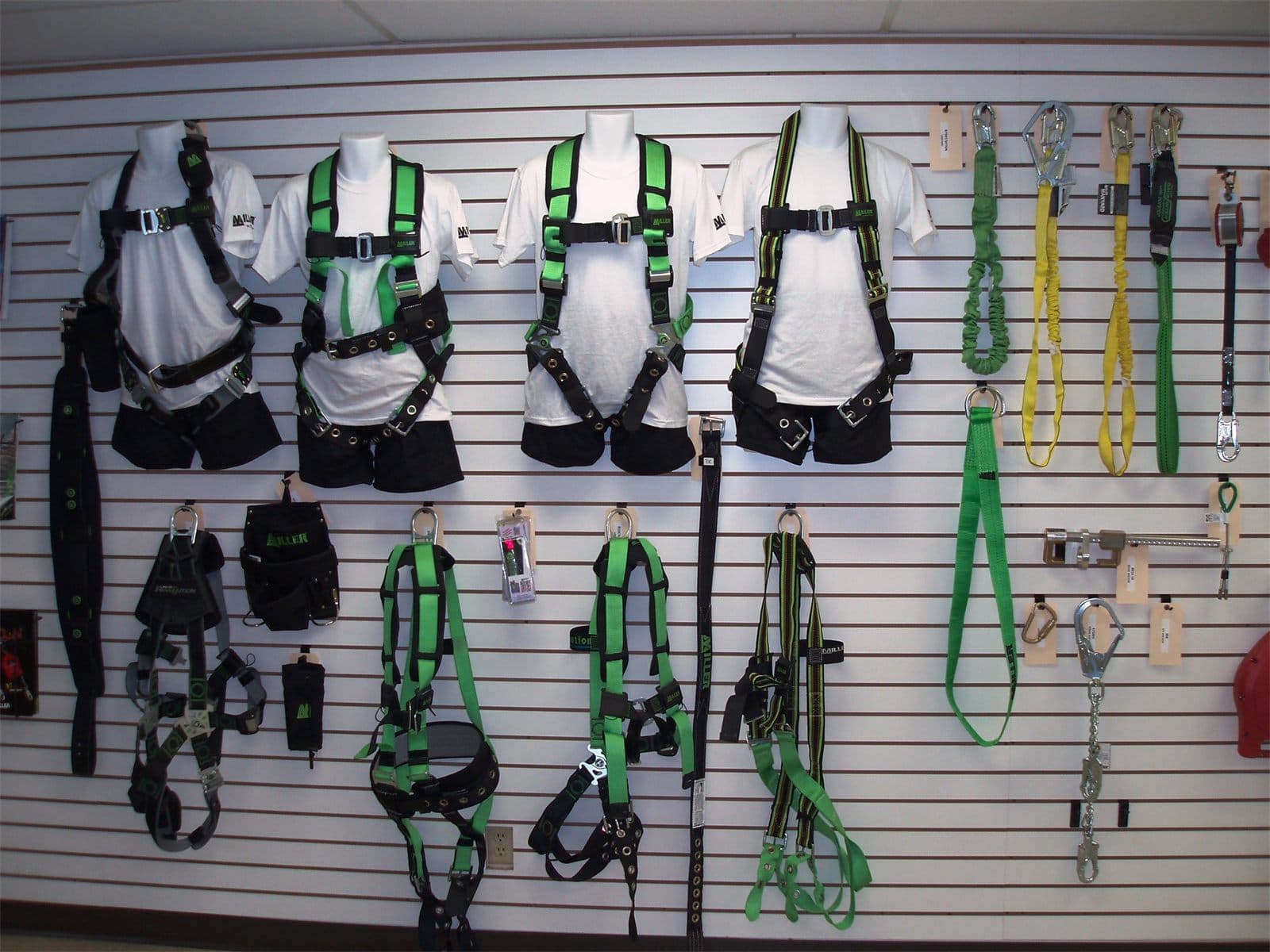
Full body harnesses
1428 part numbers · 11 families
The one piece of it that's on the worker all day, so fit decides whether it gets worn. Each family is one design in many sizes and D-ring layouts; the table lists every one. The weight capacity is the whole worker — person, clothing and tools.
Self-retracting and horizontal lifelines
596 part numbers · 32 families
Self-retracting lifelines arrest a fall in far less distance than a lanyard, which is what makes fall protection possible where there isn't 18 feet below the anchor — but a leading-edge model is the only kind rated for a strap over an edge. Horizontal lifelines are the temporary anchorage where the building offers none.
Lanyards
156 part numbers · 16 families
Shock-absorbing lanyards are the simplest connection and need the most clearance; positioning lanyards hold a worker in place and are not fall arrest on their own. The length in the table is before deployment.
Anchorage connectors
168 part numbers · 29 families
What the lanyard or SRL actually clips to: beam clamps, roof anchors, concrete anchors, straps. Rated to 5,000 lb or engineered to twice the arrest force, as OSHA requires, and every one is specific to what it fastens to.
Carabiners and snap hooks
10 part numbers · 3 families
Connectors rated for fall arrest — self-locking, with a 3,600 lb gate.
Cable and rope grabs
6 part numbers · 3 families
The sleeve that rides a vertical lifeline or Lad-Saf cable and locks under a fall.
Body belts
114 part numbers · 3 families
For positioning and restraint. A body belt is not a fall arrest harness and is not allowed as one.
Confined space
165 part numbers · 21 families
Tripods, davits and winches for entry and retrieval, and the bases they mount to. Rescue capability is part of the OSHA confined-space requirement, not an accessory.
Rescue and descent
70 part numbers · 7 families
Getting a fallen or trapped worker down, and getting to them. Suspension trauma sets in within minutes, so a rescue plan is part of the fall protection plan.
Portable frames and jibs
60 part numbers · 11 families
Free-standing anchorage that moves with the job — the overlap with Rigid Lifelines' mobile systems.
Tool fall protection
126 part numbers · 4 families
Tethers, holsters and attachment points for tools, which the dropped-object standard now covers.
Accessories
100 part numbers · 5 families
Extensions, bags, replacement parts and hardware.
Fall protection kits
6 part numbers · 1 family
A harness, connector and anchor matched by 3M for one kind of job.
The rules
What OSHA requires
29 CFR 1926.502 for construction, 1910.140 for general industry, with ANSI Z359 behind both.
1926.502(d)(16)(iii)
Free fall limit
A personal fall arrest system must limit free fall to 6 ft, and must not let the worker contact any lower level.
1926.502(d)(16)(iv)
Deceleration distance
The worker must be brought to a complete stop within 3.5 ft of deceleration distance.
1926.502(d)(16)(ii)
Maximum arresting force
1,800 lbf when used with a full body harness. Body belts have not been legal for fall arrest since 1998.
1926.502(d)(15)
Anchorage strength
5,000 lb per attached worker, or designed and used under the supervision of a qualified person with a safety factor of at least two.
1926.502(d)(20)
Prompt rescue
The employer must provide for prompt rescue, or ensure workers can rescue themselves. Suspension trauma can be fatal within minutes — a plan to call 911 is not a rescue plan.
1926.502(d)(21)
Inspection and removal
Inspect before each use. Any component subjected to a fall arrest must be removed from service immediately — it is not re-inspected back into use.
Rigid Lifelines
The structure that's there to clip to
Engineered rail systems, from the same group that builds our jib and workstation cranes. Where the building can't provide an anchorage, this is what does.
Cable sags, rail doesn't
A horizontal cable lifeline deflects under a fall — often several feet. That deflection adds directly to the clearance you need below. A rigid rail barely moves, so the clearance requirement is far shorter and far more predictable.
Shorter clearance means it fits
In a building with limited height, rigid rail is frequently the only system that works at all. Cable systems can need more fall clearance than the building has.
Lower arrest forces
Less deflection and a controlled arrest means lower forces into both the worker and the structure — which can also mean a lighter, cheaper supporting structure.
Multiple workers without interference
Rigid systems are engineered for a stated number of simultaneous users. On a cable system, one person's fall affects everyone else attached to it.
Permanent overhead systems
12 systems
Enclosed rigid track hung from the building or on its own columns, with a trolley that follows the worker so the anchor stays overhead and a fall stays short. Every one of these is engineered to the building and the work — spans, heights and mounts are the quote, not a list price.
Mobile fall arrest systems
5 systems
The same track on a base that moves: rolled to the job, or lifted by forklift, for aircraft, rail cars, trucks and anything else that can't have a permanent system over it.
Anchor Track & components
2 systems
The track section and the trolley that every system above is built from. Sold as parts for extensions, replacements and systems built to a drawing.
Harnesses & SRLs
3 systems
The personal gear Rigid Lifelines pairs with its track. 3M's range covers the same ground with more choice; either connects to any of these systems.
After a fall
Used once means out of service
Any harness, lanyard, SRL, or anchor that has arrested a fall comes out of service immediately and does not go back. The energy absorber has deployed, and the webbing has taken loads you can’t see. It is not inspected back into use.
Equipment also needs inspection before every use by the worker, and a documented periodic inspection by a competent person. That’s the record an OSHA inspector asks for.
Fall protection inspection →Rescue
Stopping the fall is only half of it
A worker hanging in a harness is on a clock. Suspension trauma can turn serious within minutes, long before an outside crew arrives. OSHA requires the employer to provide prompt rescue — and “we’d call 911” does not meet it.
We’ll go through the rescue plan alongside the equipment: who does it, with what, and how long it takes from the moment the fall happens.
Training & competent person courses →Other product lines
All products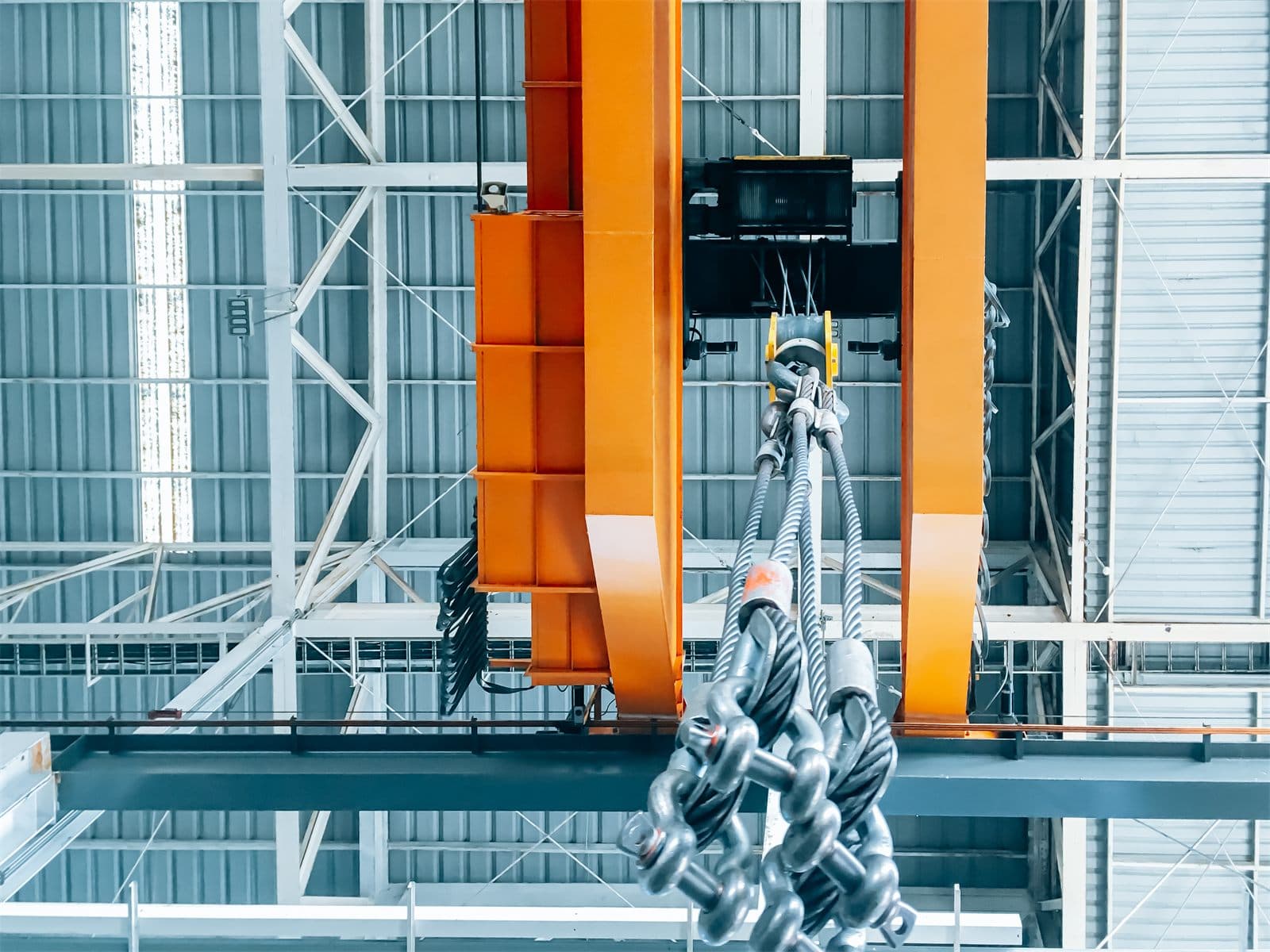
Wire Rope & Assemblies
Fabricated, swaged, and proof-tested in our own shops
Learn more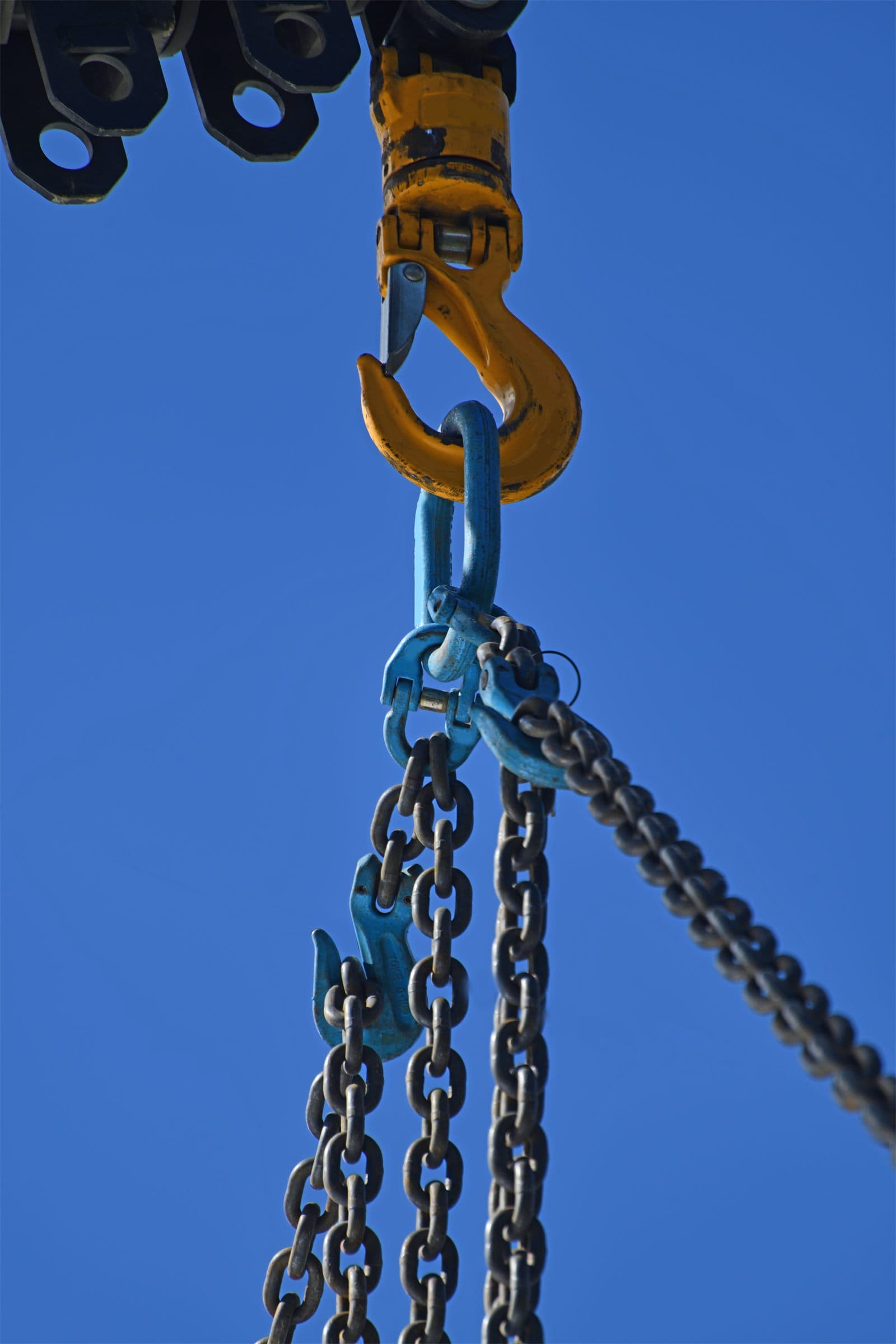
Lifting Slings
Wire rope, chain, web, and roundsling — made to length
Learn more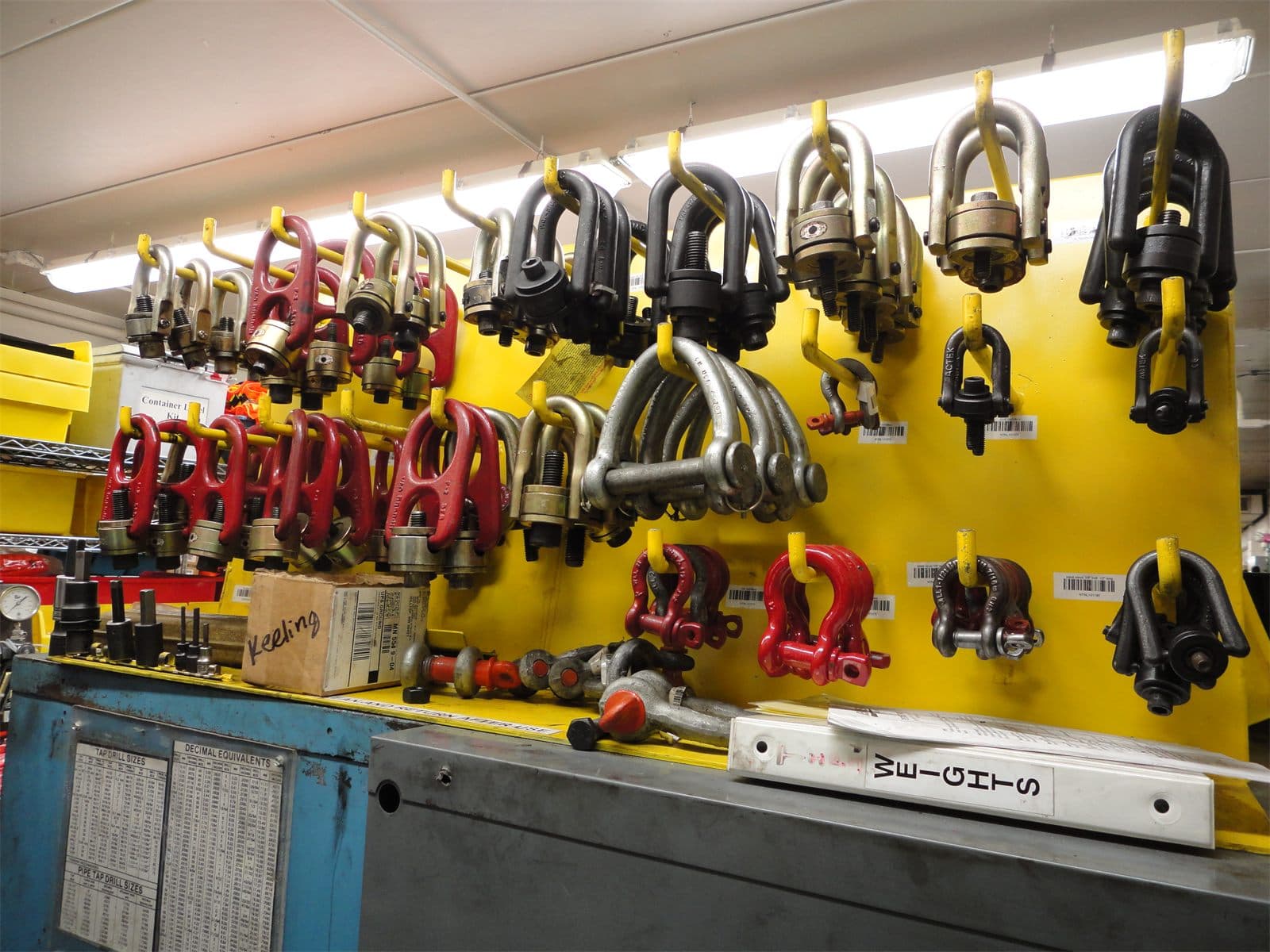
Rigging Hardware
The stocked components that keep jobs moving
Learn more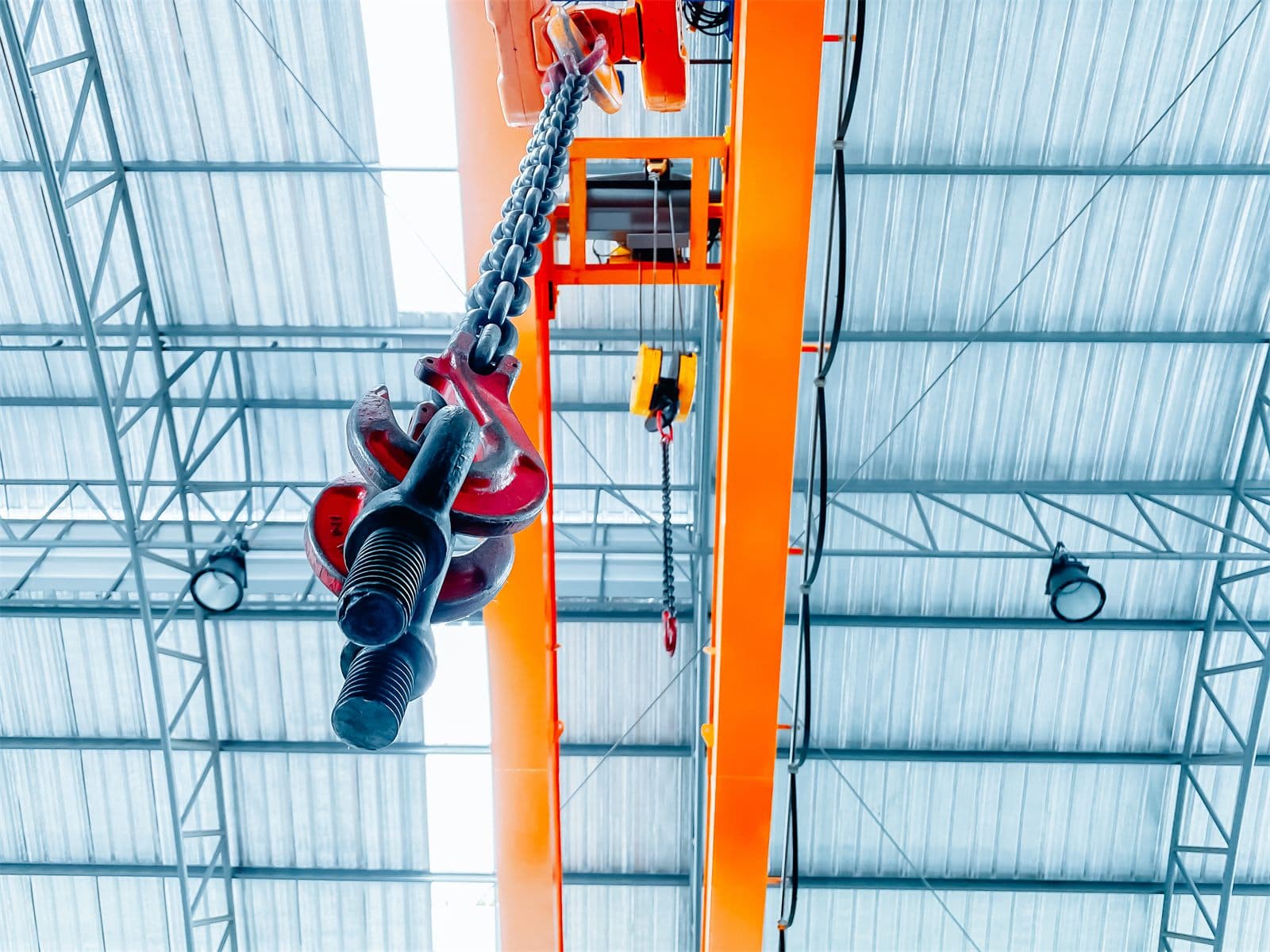
Cranes & Crane Systems
New systems, modifications, and runway upgrades
Learn moreSend us the height, we'll tell you what fits
Distance to the floor, where the anchor can go, and what the work involves. If there isn't room to arrest a fall we'll say so and look at restraint or a rail system instead.